In the Netflix series From Scratch, Italian chef Lino Ortolano arrives in Texas and observes something profound: "The city has no center." Coming from Sicily, where the local Piazza acts as the community’s "living room," Lino found the sprawling, endless streets of a modern American city spiritually empty. His heartache touches on a modern architectural truth: we often live in spaces that are high on convenience but low on soul.
Anthropologist Marc Augé argued that a true Place must have three things: Identity (it is unique), Relation (it connects people), and History (it bears the marks of time).

The Italian Piazza is a perfect "Place." No two are identical; they are where neighbors meet, and every cobblestone holds the footprints of generations.
In contrast, modern life is filled with Non-Places. Think of airports, supermarkets, or mass-produced apartment blocks. These are functional spaces where you are just a seat number, a room code, or a customer ID. You are a passenger, not a resident. You can be in a gold-plated airport lounge and still feel utterly alone because the space doesn't know who you are, and frankly, it doesn't care.
In The Poetics of Space, philosopher Gaston Bachelard described the home as our "corner of the world." Without a "heart," a house is just a body without a heartbeat.

Today, we are falling into the trap of global standardization. Whether in Ho Chi Minh City, New York, or London, modern apartments are starting to look identical: glossy tiles, white walls, and industrial laminate furniture. When we prioritize extreme minimalism and cold functionality, we accidentally kill emotion. We end up feeling like guests in our own homes because there is no physical connection to the things we touch.

Have you ever noticed a paradox? We spend years decorating our homes, yet sometimes we feel more "at home" after just 24 hours in a luxury boutique hotel.
Why? Because luxury hospitality experts design an experience, not just a room. They use Neuro-architecture to speak to our "limbic system", the oldest part of the brain that governs emotions and memories.
- The Power of Scent: Top resorts avoid industrial cleaners. They use scents of raw wood, old paper, or herbal oils. Unlike other senses, smell goes straight to the brain's emotional center (the Amygdala). It triggers Homeostasis—a signal to your body that you are safe and can finally relax.

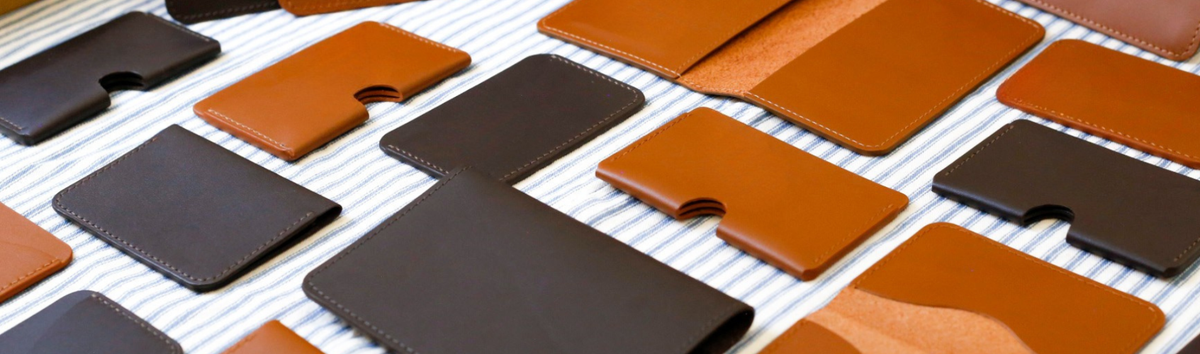
- The Power of Touch: Plastic and laminate are "sterile" materials. They are cold and unchanging, which keeps our subconscious on guard. This is why leading resorts are returning to handmade, natural materials. A hand-stitched leather tray or textured art paper provides "micro-stimuli" to our fingertips, grounding us in the present moment.

At Neyuh Home & Travel, we’ve seen a major shift. High-end hospitality brands are now seeking bespoke, handcrafted leather goods. They are willing to wait longer and pay more because they know these details carry the "spirit" of the space.
Bringing authentic leather into your home is about establishing a "center." Unlike plastic, vegetable-tanned leather is a living material. It remembers time. As you use it, the oils from your hands and the sunlight create a patina. It ages with you.
In home decor, a handcrafted item is there to be nurtured and to nurture you back. When you choose objects that can "grow old," you breathe life into square walls, turning a "non-place" into a sanctuary with its own identity

A "center" doesn't have to be a grand square or a massive room. It can be a cozy reading nook under a warm lamp, a leather tray where you set your morning coffee, or a dining table where the family finally puts down their phones to look into each other's eyes.
Ultimately, a home is a living entity. To give it a soul, we must be brave enough to choose the slow, the handcrafted, and the authentic "touch points" of life.