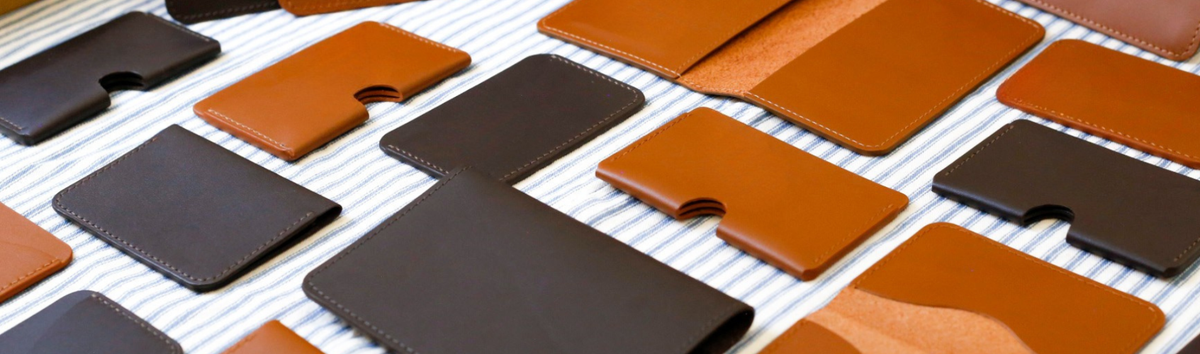
There is a bitter truth in the luxury retail industry: many brands stumble precisely at the moment they begin to succeed. When an order jumps from 50 to 500 units, a trap emerges—one where the "error rate is proportional to scale." For OEM/ODM retailers, the most haunting question isn't whether a workshop can handle the quantity, but rather: "Will the 500th piece still hold the soul of the first?"
The common wisdom suggests that to go big, you must automate; that assembly lines are the only way to ensure consistency. But in sectors demanding high aesthetics - like leather, wood, or recycled materials - machinery can sometimes be the enemy of finesse. Automation excels at the mundane and the repetitive. However, for materials with their own "temperament" like leather, only the eyes and hands of a master artisan know where to give way and where to tighten the grip.

The greatest hurdle in scaling craftsmanship is the "dilution" of skill. A workshop used to producing 50 pieces that suddenly receives an order for 500 is prone to rushing, cutting corners, or hiring temporary, unskilled labor. The result? The 500th bag might look identical to the first at a glance, but once held, the lack of structural integrity in the stitching, the rushed edge finishing, and the loss of that vivid, "stately" presence become painfully obvious.
How Does Gallery de NEYUH Maintain Control When The Orders Pour In?
We refuse to build "industrial sweatshops" where hundreds of workers are crammed together to hit quotas. Such an environment turns artisans into exhausted cogs in a machine - and when a craftsman is tired, quality suffers. Instead, we operate through a micro-factory network.
Imagine each workshop as an elite cell of artisans, masters of their specific craft, empowered to obsess over the smallest details. The beauty of this model is that whether it is the 10th or the 1,000th bag, it passes through the exact same stages. There are no shortcuts; no skipping steps to meet a deadline. If a single line of stitching requires 15 minutes of manual labor, it will still take 15 minutes at a NEYUH workshop, regardless of the order size. When you order 500 units, we distribute the work across five equally skilled groups. This requires significantly more management effort, but it ensures no single artisan is ever overextended.

When volume grows, we don't force one person to work twice as fast. Instead, we weave more talented hands into our network - all operating under a rigorous aesthetic standard that is "in their blood." These workshops function like families, where artisans self-police out of collective pride. If one person does sloppy work, the entire group loses the contract. This cross-supervision between peers of equal skill is a hundred times more effective than a "QC officer" with a checklist at the end of a conveyor belt.

This is most evident in our work with recycled materials. Recycled components are notoriously "difficult" due to their inconsistency. An industrial line would surrender to these variations, but for artisans who truly master their tools, every deviation in the material is an opportunity to showcase problem-solving skills. This ensures that every finished product reaches a standard of consistent excellence while retaining its unique character.
How Do We Prove It?
Look at how we "scrutinize the flaws." In the Gallery de NEYUH workflow, defective products aren't hidden; they are hung up as a lesson for the entire network. To be frank, we always over-produce as a way to manage unforeseen risks. Our artisans are directly involved in the QC process rather than leaving it to an independent department—if a problem arises, it is fixed on the spot. This transparency is why we confidently invite our partners to randomly inspect any piece in a batch.

For retailers seeking an OEM/ODM partner in leather, fabric, wood, or recycled materials, the right question isn't "Do they do handcrafted work?" but rather "Can they protect the spirit of the craft when I need more volume?"
At Gallery de NEYUH, the answer is yes. And that isn't a marketing promise—it is simply how we have operated since the day we were founded.